The “Movie Location” City Guide That’s Actually About the Neighborhoods

I get why people do movie-location trips. You watch a show, you see the streets over and over, and after a while the city starts feeling familiar—like you’ve already walked there, even though you’ve only walked there with your eyes. So when I finally planned a weekend around a filming location, I thought the whole …
 Evan
5 min read
Evan
5 min read
I get why people do movie-location trips. You watch a show, you see the streets over and over, and after a while the city starts feeling familiar—like you’ve already walked there, even though you’ve only walked there with your eyes. So when I finally planned a weekend around a filming location, I thought the whole trip would revolve around “the spots.” The famous corners. The exact angles. The photo-proof.
But once I got there, I realized something fast: the best part wasn’t standing where a scene happened. The best part was what was around it—the neighborhoods the scenes were borrowed from, the streets that weren’t famous, the cafés that weren’t on any list, and the small details that made the place feel alive even when nothing “iconic” was happening.
So this isn’t a guide to chase frames. It’s a guide to use the movie locations as a thread, then let the city do the rest.
How I Planned It (Without Turning It Into a Scavenger Hunt)
The trick is not to plan by scenes. Plan by areas.
Movie-location lists can make you ping-pong across a city like you’re trying to complete a quest. That’s where the trip gets exhausting and weird. Instead, I grouped locations by neighborhood and treated them like a reason to explore the area slowly—walk the streets, pick a café, sit somewhere, browse a shop, find a small park, and let the “famous spot” be just one moment inside a bigger, normal day.
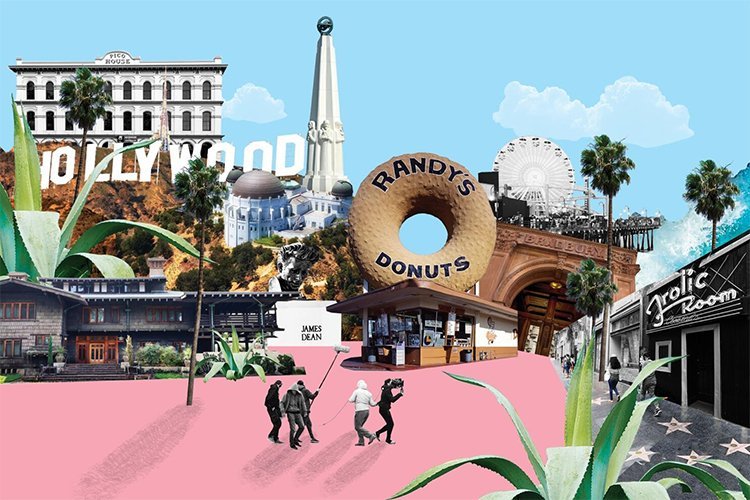
My rule was simple: one neighborhood per half-day. If I tried to squeeze more, the day turned into logistics.
Neighborhood 1 — The “Iconic Corner” Area
This is usually the area people rush through the fastest. They show up, take the photo, leave.
I did the opposite: I went early, found the spot, let myself enjoy the little “wait, I recognize this” moment—and then I stayed.
I walked the nearby streets on purpose because filming locations are often chosen for a reason: the architecture, the vibe, the light, the layout of the streets. You can feel that when you’re not rushing. I found a simple place for coffee nearby and sat down like I lived there for ten minutes. That sounds small, but it’s what shifts the trip from “tourist mission” to “real travel.”
Neighborhood 2 — The “Living City” Area
This is where the trip starts feeling like a real weekend away instead of fandom errands.
In most cities, there’s a neighborhood that gives you actual everyday life: people walking dogs, little grocery shops, bookstores, casual restaurants, side streets with personality. Filming spots here usually feel less like “landmarks” and more like someone’s normal street corner—which I love, because it means you can just explore without performing.
I’d pick one filming spot in this neighborhood, visit it casually, then let the rest of the time be about the area itself: slow wandering, a lunch spot that wasn’t hyped, a local market if there was one, and a quiet place to sit when my brain needed a pause.
This is also where I stopped caring about getting the perfect photo. Once the day feels real, you don’t need proof.
Neighborhood 3 — The “Scenic Edge” Area
A lot of filming happens near scenic edges—waterfronts, bridges, hills, older streets with views. This part can go two ways: it can become crowded and chaotic, or it can feel like the calmest part of your whole trip.
I kept it calm by going at a time when the area wasn’t packed, walking more than driving, and choosing one simple route instead of trying to hit ten points. If there’s a viewpoint, I actually stayed there. If there’s a waterfront path, I walked it slowly. I didn’t treat it like a “get the shot and leave” moment.
And honestly, this is the part where the trip stops being about the movie and starts being about you enjoying a place.
What I Ate (Because Food Sets the Mood)
I didn’t chase “famous” restaurants across town. That’s how you end up hungry, annoyed, and rushing again.
Instead, I ate like I was staying in each neighborhood for a while:
- coffee near the first location
- lunch in the neighborhood I was already walking
- dinner somewhere relaxed that didn’t require strategy
Food is part of the pacing. If meals become chaotic, the whole day becomes chaotic.
The Three Things That Made It Feel Like a Human Trip
These were the small choices that made the weekend feel real.
1) I limited myself to a few locations I actually cared about
Not every spot. Just the ones that meant something to me. The rest I let go without guilt.
2) I built in “dead time”
A bench. A café. A slow walk with no destination. Dead time is what makes travel feel like travel, not like a checklist.
3) I treated the city like the main character
The show was the hook, but the city was the point. Once I kept that mindset, everything felt lighter.
The Mistake That Makes These Trips Feel Tourist-Trappy
The mistake is trying to do it all.
When you try to hit every filming location, you spend the whole day on maps, in transit, and in a slightly stressed state. The trip becomes more about completing something than enjoying something.
If you want the weekend to feel good, the list has to be shorter than your ambition. Always.
Final Verdict
A movie-location trip is actually a great way to explore a city—if you plan it like a neighborhood guide instead of a scavenger hunt. Pick a few meaningful spots, group them by area, explore slowly, eat nearby, sit down sometimes, and let the “famous” corners be a small part of a bigger day. That’s what makes it feel like real travel, not tourist choreography.


0 comments
Be the first to comment.