the grocery-bag workout i didn’t mean to start

The truth is, I didn’t wake up one day and decide to become a “fitness person.” I’m not a trainer. I’m not an athlete. I’m just someone who feels better when I moves—and still acts surprised when I don’t move for a week and everything starts feeling stiff and heavy. The Moment It Clicked (Not …
 Evan
7 min read
Evan
7 min read
The truth is, I didn’t wake up one day and decide to become a “fitness person.”
I’m not a trainer. I’m not an athlete. I’m just someone who feels better when I moves—and still acts surprised when I don’t move for a week and everything starts feeling stiff and heavy.
The Moment It Clicked (Not in a Gym)
It wasn’t a gym moment. It wasn’t even a planned moment.
It was me in my building hallway, holding two grocery bags that were definitely heavier than they looked in the store, staring at the stairs like they had personally offended me.
The Elevator Was Out
The elevator was out. Of course it was.
I stood there doing mental math that didn’t make sense: What if I just wait? What if it comes back? What if I pretend I forgot something and… disappear?

The First Step Was the Hard Part
Then I took one step up.
Then another.
And the weird part is, once I started, it wasn’t “easy,” but it wasn’t impossible either.
The Realization
By the time I reached my floor, my arms were tired and my breathing was louder than I wanted it to be.
And I had that very specific thought: Oh. This counts. This is movement. I’m doing a thing.
Not a glamorous thing. Not a transformation thing. Just a thing.
Why Fitness Feels Like a Separate Life
I think fitness gets complicated because we treat it like a separate life.
There’s real life… and then there’s the fitness life we keep trying to schedule on top of it.
That fitness life has clean meals, uninterrupted time blocks, matching outfits, and a brain that doesn’t suddenly remember ten other tasks the moment you try to start.
My life doesn’t look like that.
My Real-Life Schedule
My real life is more like: I have fifteen minutes, I’m tired, the floor needs sweeping… and I’m going to sit down “for a second” and then it’s somehow two hours later.
So I stopped thinking about fitness in a “program” way.
The Simple Question
What if fitness didn’t need a special time slot?
What if it didn’t need to look like a workout?
What if it could just live inside the day I already have?
The “Movement in the Seams” Idea
The first thing I noticed was how many little chances I had to move—and how often I ignored them.
I’d come home, drop my bag, and immediately sit. Not because sitting was needed. Just because it was the default ending.
The Pattern I Kept Repeating
Open door.
Drop stuff.
Sit down.
Tell myself I’ll move later.
And then later doesn’t show up.
The Experiment
I didn’t want a big plan. I wanted something that didn’t require a big decision.
So I kept life the same, but added movement into the parts that already existed.
Not a dramatic reset.
Just movement in the seams.
Grocery Bags Became the First Anchor
I didn’t choose grocery bags because they’re fun.
I hate carrying groceries. I buy one extra item and suddenly I’m struggling like I’m hauling supplies through a storm.
But that’s exactly why it worked.
The resistance was already built in.
I Started Noticing How I Carried Things
Sometimes I carried both bags on one side because it felt easier in the moment.
Then my shoulder would complain later.
Sometimes I gripped too hard. Sometimes I walked too fast and arrived home annoyed.
Small Adjustments That Actually Helped
So I tried doing it more intentionally:
- switching sides halfway
- standing taller instead of folding forward
- slowing down enough that I wasn’t fighting my own breath
It wasn’t a performance. It was just carrying things like they mattered.
Why That Mattered
Because it gave me something repeatable.
And repeatable beats impressive, especially long-term.
The Stairs Showed Me the Real Problem
I don’t live in a tall building. This wasn’t heroic stair training.
Just a few flights.
But a few flights done often still adds up.
At First, I Only Used Them When Forced
If the elevator worked, I took it.
If it didn’t, I didn’t have a choice.
Then I Tried Choosing Them Sometimes
Not every day.
Not like a punishment.
Just occasionally, on days when I felt okay.
The Real Lesson
The hardest part wasn’t the stairs.
It was starting.
Once I started, the rest was usually fine.
So I began treating “starting” like the workout.
If I could start, I was already winning.
Tiny Movement While Life Is Happening
Around the same time, I realized I was waiting for the perfect energy level to do “real workouts.”
The perfect energy level is a myth.
Real energy is messy.
The Kettle Stretch
So I started doing tiny things that didn’t require belief.
Stretching while the kettle boiled.
Not a full routine. Not a session. Just moving my shoulders because they always feel tight.
Sometimes it was one minute. Sometimes five. Sometimes I forgot.
But the point was: it wasn’t “workout time.”
It was just movement inside a normal moment.
Why That Worked
Because I didn’t need motivation.
I just needed a small action that didn’t feel heavy.
Make It Easier to Move Than Not to Move
This is not about motivation. It’s about friction.
If moving requires ten steps of preparation, you won’t do it on tired days.
The Shoe Trick
If my shoes were hidden away, walking felt like effort.
If they were near the door, walking felt more likely.
Simple, but real.
The Space Trick
If the living room was cluttered, stretching felt annoying.
If there was even a small clear patch of floor, movement felt possible.
I didn’t become a minimalist. I just removed a few obstacles.
The Main Point
Sometimes fitness isn’t willpower.
Sometimes it’s not making your future self hate you.
The Week I Did “No Workouts” (But Still Felt Better)
There was a week where nothing looked like a workout.
No timer. No playlist. No session.
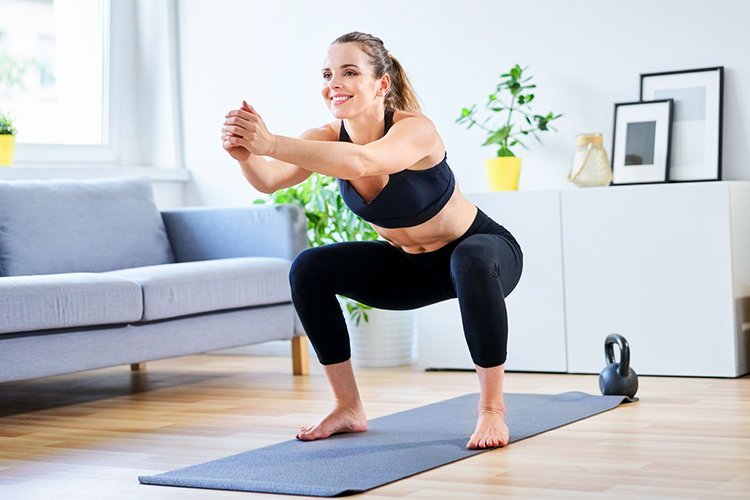
But I walked more. I carried groceries. I took stairs twice. I stood while folding laundry. I did a couple squats while waiting for food to heat up.
Mostly because I was bored.
What I Noticed
By the end of that week:
- my back felt less stiff in the morning
- my mood was steadier (not amazing, just steadier)
- my body felt more “available,” like it wasn’t bracing against everything
That’s when it hit me: fitness isn’t only built in workouts.
It’s built in repetition.
And repetition can come from real life.
This Isn’t Anti-Workout (It’s Pro-Real-Life)
Some people love structured workouts.
Some people need them. Some people thrive on them.
That’s not what I’m arguing against.
Who This Is For
This is for the people (me included) who keep trying to start the “perfect routine” and then quit because life doesn’t care about perfect routines.
If that’s you, smaller movement that fits into real life can break the loop.
Not because it’s magical.
Because it’s realistic.
The Biggest Change Was Mental
The biggest change wasn’t physical.
It was mental.
I Stopped Treating Movement Like a Test
Before, if I didn’t do a proper workout, I felt like I’d done nothing.
Now, movement was allowed to be imperfect and still count.
And once something is allowed to count, you do it more often.
Lorem ipsum dolor sit amet, consectetur adipiscing elit. Ut elit tellus, luctus nec ullamcorper mattis, pulvinar dapibus leo.
I Stopped “Saving” Movement for Later
I used to think: I’ll work out later, so I don’t need to move now.
Later would arrive, I’d be tired, and then nothing would happen.
So I flipped it: I moved when I could, even lightly.
If a real workout happened later, great.
If not, I still moved.
Daily Life Is Stronger Than We Give It Credit For
A funny side effect of this approach is noticing how strong daily life actually is.
Carrying water bottles. Standing on the train. Walking briskly because you’re late. Lifting a box. Cleaning the floor. Going up and down during chores.
It’s not “exercise” in the branded sense.
But it’s movement. It’s load. It’s repetition.
The Identity Shift
When you start respecting that movement, you stop seeing yourself as someone who “doesn’t work out.”
You start seeing yourself as someone who moves.
That shift matters, because people repeat what matches how they see themselves.
Conclusion
This didn’t turn me into a gym person.
It didn’t give me a perfect routine. It didn’t make me love burpees (still no). It didn’t solve my schedule.
What it did do was make movement easier to return to, because it stopped being an all-or-nothing decision.


0 comments
Be the first to comment.