The Food-Bowl Pause That Helped My Dog Stop Inhaling Meals
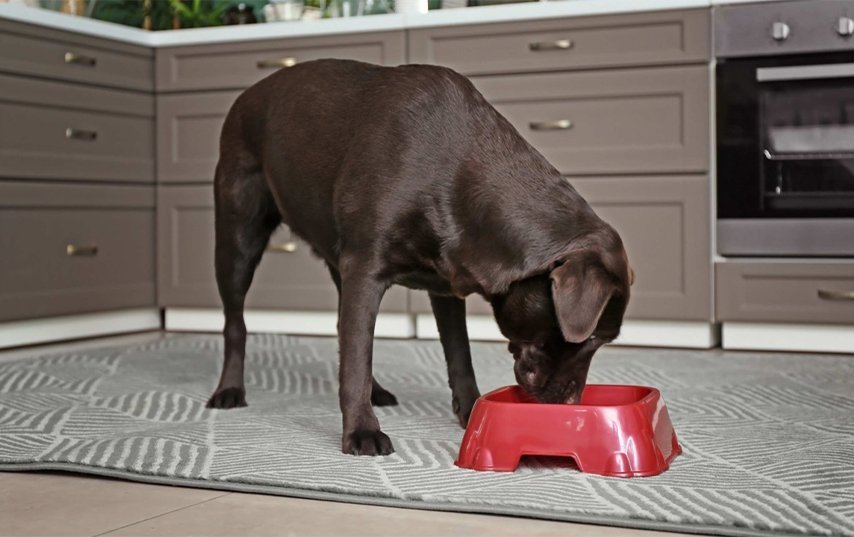
For the longest time, I thought my dog was just… an enthusiastic eater. You know the type. Food hits the bowl and suddenly it’s a competitive sport. He’d inhale everything like he had an appointment in two minutes, then look up like, Cool. What’s next? Meanwhile I’m standing there holding the empty bowl like I …
 Evan
8 min read
Evan
8 min read
For the longest time, I thought my dog was just… an enthusiastic eater. You know the type. Food hits the bowl and suddenly it’s a competitive sport. He’d inhale everything like he had an appointment in two minutes, then look up like, Cool. What’s next? Meanwhile I’m standing there holding the empty bowl like I just watched a magic trick.
At first, it was kind of funny. Then it became one of those “not funny anymore” routines—because the speed came with side effects. Occasional gagging right after meals. That weird hiccupy breath. Sometimes he’d act like he still wanted more food even though he clearly hadn’t even experienced the food he just ate. And on the days he ate too fast, his stomach would sound like it was negotiating with itself.
Nothing was consistently “wrong,” which is exactly why it took me so long to deal with it. It wasn’t a medical crisis. It was just a daily habit that felt slightly chaotic. And honestly, I didn’t want to buy five different bowls, gadgets, and “solutions” and then end up using none of them.
So I tried something smaller. Something almost silly. A tiny pause ritual that takes seconds—because I knew if it felt like a project, I’d quit.
The Pattern I Finally Had to Admit Was a Problem
It wasn’t only the speed. It was what the speed did to him after.
He’d finish eating and immediately ask for more attention, more snacks, more everything—like his brain didn’t get the signal that we just did a meal. Some days he’d gulp water right after, which sometimes made the whole thing worse. Other days he’d just pace around the kitchen like he was waiting for the “real” meal to arrive.
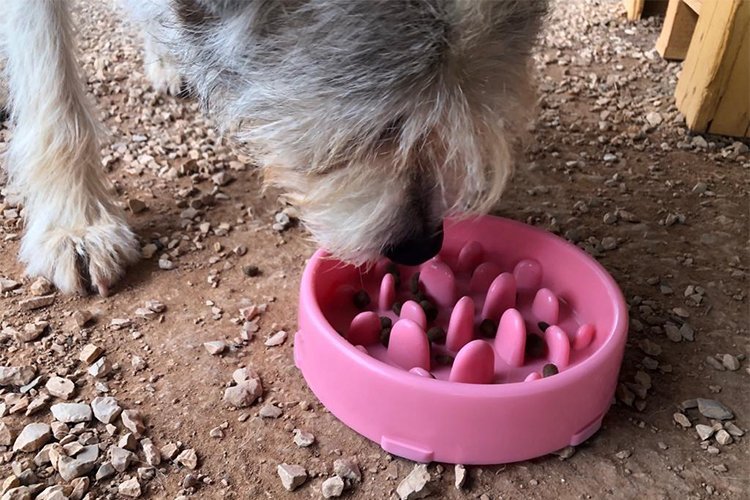
And I noticed another thing: the faster he ate, the more tense he looked. Shoulders forward. Head down. Body stiff. It didn’t even look enjoyable—more like he was defending his food from invisible competition.
I realized I wasn’t just feeding him. I was accidentally rehearsing a stress habit twice a day.
The Moment I Realized the Fix Had to Be Tiny
I tried the obvious stuff first—“slow down” in a cheerful voice, which is… adorable, because dogs do not understand my motivational speeches. I tried standing nearby. I tried putting the bowl down and lifting it up again mid-meal, which turned into a weird game that made him even more intense.
Then one morning, I caught myself rushing. Not him—me. I was dropping the bowl down like I was late for something. He responded like it was an emergency. And it hit me: the whole meal started with energy that said GO GO GO.
So instead of trying to control the eating once it began, I focused on the two seconds before it began.
That became the shift.
What I Changed (Without Turning It Into a Big Training Thing)
I built the whole habit around one trigger: the bowl hitting the floor. That moment already exists. So I attached the “slow down” behavior to that moment, instead of trying to fix it mid-chomp.
1) I added a “bowl pause” before he was allowed to eat
Here’s what it looks like in real life: I place the bowl down, and I don’t release him into it immediately. I ask for one calm behavior first—nothing fancy. For us, that’s a sit. Sometimes it’s just “wait.” Sometimes it’s literally just standing still for a beat.
At first, the pause was one second. I’m not exaggerating. One second.
Because the point wasn’t to make him a disciplined robot. The point was to interrupt the launch sequence. That tiny pause was enough to change the tone of the meal from panic energy to okay, we’re calm.
Then I gradually stretched it to two seconds. Then three. Not every day. Not perfectly. Just slowly enough that it didn’t become a struggle.
2) I stopped placing the bowl like it was a race start
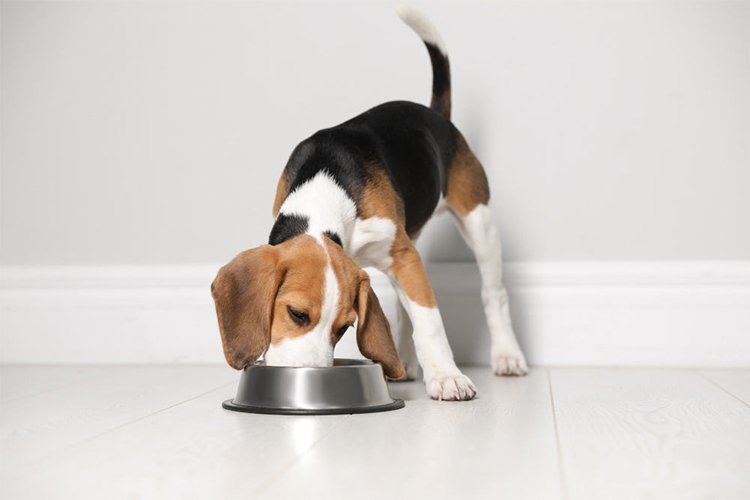
This was my own bad habit. I used to rush the bowl down and step back like I was avoiding impact. Now I place it down slowly, like it’s normal. Because it is normal. It’s breakfast, not a jackpot.
I also stopped “hyping” meal time. No dramatic voice. No excited clapping. No “YAY FOOD!” energy. It sounds small, but dogs pick up on the vibe. If I’m acting like this is the biggest moment of the day, he will also act like that.
3) I fed smaller portions in two rounds (on the days he was extra intense)
This was not an everyday thing, but it helped. If I knew he was in “vacuum mode” (usually after a more active day), I’d split the meal into two mini-servings. Bowl down, pause, eat. Then we do a short reset—water, a quick calm moment—then the second half.
It sounds annoying, but it actually took less time than dealing with a dog who immediately feels gross after eating too fast.
4) I added one “slow-down texture” to the bowl
I didn’t want to turn this into a shopping spree, so I started with what I already had. If he was eating kibble, I’d add a bit of water so it wasn’t so dry and easy to inhale. Not soup. Just enough to slow the speed slightly.
On days he had wet food, I’d spread it a little thinner in the bowl instead of piling it into a mound. That tiny change made him work through it instead of swallowing it like one big objective.
And no, it wasn’t perfect. But the goal wasn’t perfection. The goal was fewer chaotic meals.
What Happened Over Time (The Real-Life Version, Not the “Perfect Dog” Version)
The first thing that changed was the vibe. Meal time stopped feeling tense. He stopped launching at the bowl like he was trying to beat someone to it. The pause gave him a moment to “arrive” instead of attack the food.
The second thing that changed was the after-meal behavior. Less gagging. Less frantic water-chugging. Fewer weird stomach noises. He didn’t always become instantly calm, but the post-meal chaos reduced.
And the third thing—this surprised me—was that he started looking at me more during meals. Not in a begging way. More like he was checking in. That tiny pause trained him to notice me in the routine again, instead of going into tunnel vision.
It made feeding him feel less like I was managing an emergency and more like I was just… feeding my dog.
The Part That Almost Ruined It
This is where my brain tried to sabotage the whole thing: I almost made it too strict.
I had the thought, Okay, now he must wait ten seconds every time. Every meal. No exceptions. And then I remembered how real life works. Some mornings I’m running late. Some evenings he’s extra hungry. Some days he’s not in the mood to perform manners.
If I made this routine fragile, it would break.
So I kept one rule: the pause exists, even if it’s tiny. One second still counts. A calm breath still counts. Standing still still counts.
The habit survives because it’s flexible.
Why This Worked Better Than “Just Buy a New Bowl”
I’m not anti slow-feeder bowls. They can be great. But the problem I had wasn’t only the bowl—it was the emotional speed.
My dog wasn’t just eating fast. He was eating like something might be taken away. The pause taught his body that food is stable. It’s coming. It’s not a scramble.
Also: the pause trained me too. It forced me to stop treating meals like a rushed task and start treating them like a routine moment.
And that’s what made it stick. Because it wasn’t about equipment. It was about a small rhythm change that I could repeat without thinking.
If You Want to Try It, Here’s the Easy Version
If your dog eats like a vacuum cleaner, try this without overcomplicating it:
- Place the bowl down slowly.
- Ask for one calm moment before they eat (sit, wait, or simply standing still).
- Start with one second. Seriously. One.
- If they struggle, make the pause shorter, not longer.
- On “extra intense” days, split the meal into two mini rounds.
- Keep it boring. Boring routines survive.
And as always: if your dog has frequent vomiting, repeated gagging, trouble swallowing, sudden appetite changes, or anything that feels “not normal for them,” that’s a vet conversation. This routine is for habits—not for ignoring real problems.
Final Verdict
This didn’t turn my dog into a graceful eater who savors each bite like a food critic. He’s still a dog. He still loves food. He still eats faster than any human I’ve ever met.
But the bowl pause changed the whole tone. Meals became calmer. His stomach seemed happier. And I stopped feeling like feeding time was a twice-daily mini crisis.
If you want a simple fix that doesn’t require a new product, this is a good place to start: a tiny pause, repeated consistently, that teaches your dog “food is safe, and we have time.”
Keep reading
 Pet Life
The Gut-Health Shift I Didn’t Expect to Matter This Much
Evan · · 6 min
 Pet Life
My Dog’s Morning Routine That Made His Joints Feel Better
Evan · · 8 min
 Pet Life
 Pet Life
How I Helped My Cat Stop Hiding When Guests Came Over
Evan · · 7 min
0 comments
Be the first to comment.