How I Helped My Cat Stop Hiding When Guests Came Over

My cat isn’t “shy” in a cute, mysterious way. My cat is strategic. If someone new walks into the house, he disappears like he has a backup career in espionage. No drama, no warning—just gone. And then, for the next hour (sometimes two), the house turns into this weird performance where I’m trying to act …
 Evan
7 min read
Evan
7 min read
My cat isn’t “shy” in a cute, mysterious way. My cat is strategic.
If someone new walks into the house, he disappears like he has a backup career in espionage. No drama, no warning—just gone. And then, for the next hour (sometimes two), the house turns into this weird performance where I’m trying to act normal while quietly wondering if my cat is stressed out under the bed, plotting revenge.
At first I told myself it was fine. Cats hide. That’s what they do. But the more it happened, the more I noticed the pattern: it wasn’t just hiding. It was the long recovery time after guests left. He’d come out slowly, sniff everything like the room had been “contaminated,” and act slightly offended that I allowed strangers to exist.
So I stopped treating it like a personality quirk and started treating it like a comfort problem. Not a “fix my cat” mission. More like: how do I make this less intense for him without forcing him into social situations he doesn’t want?
The Pattern I Finally Admitted Was Stress
It wasn’t only the guests. It was the full sequence.
- Doorbell or knock → instant vanish
- Quiet hiding → no interest in treats
- A long time before he reappears
- Weirdly clingy later, or extra distant later
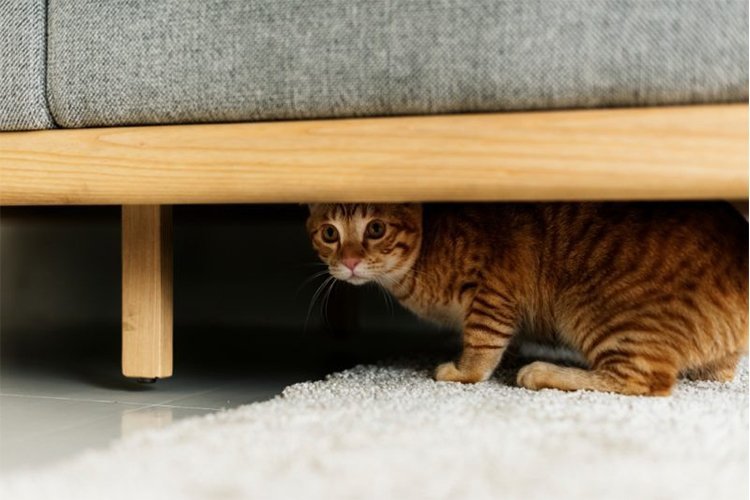
And the part that made me feel guilty was this: he wasn’t choosing to hide because he loved hiding. He was hiding because that was the only tool he had to feel safe.
The goal wasn’t “make my cat love strangers.” The goal was: give him options. A safer way to handle guests that didn’t involve disappearing for half the night.
The Shift That Helped: I Stopped Making Guests the Main Event
The biggest change wasn’t a product or a trick. It was me changing the vibe.
I used to do the classic thing when guests arrived: talk louder, move faster, focus on the door, greet people with big energy. Which basically tells a cat, Something huge is happening! Panic accordingly!
So I started acting like guests were… normal. Because they are. And cats read “normal” better than they read reassurance speeches.
Then I built a small routine around that.
What I Did (Without Forcing Him to “Be Social”)
1) I created a “guest-proof” safe zone, but I made it better than under the bed
Under the bed is the default hiding place because it’s dark and tight and nobody can reach him easily.
So I made a better option: a covered cat bed (or a box—cats love a box) in a quieter corner, with a blanket that already smelled like him. I didn’t put it right next to the action. I put it somewhere he could still hear what was going on without feeling exposed.
The important part: I treated it like his space, not a place I would reach into. If he went there, I didn’t pull him out. I didn’t coax him. I let it be a genuine safe spot.
2) I introduced the “door sound” without the door chaos
This sounds silly, but it helped: I practiced the trigger when nobody was coming.
A few times a week, I’d play the doorbell sound softly (or knock lightly), then immediately toss a treat in his direction—far enough that he had to move a little, but not so far it felt like a hunt.
Knock → treat.
Door sound → good thing.
I wasn’t trying to make him excited about the door. I just wanted to soften the reflex that door sounds = danger.
And I kept it short. Two treats. Done. Because if I overdid it, he’d get suspicious.
3) I stopped letting guests “hunt” him with kindness
You know the type of guest: “Where’s your cat?? I love cats!” and then they start walking around trying to find him, talking in a baby voice, reaching into hiding spaces.
It’s well-meaning. It’s also a nightmare for a nervous cat.
So I started giving guests one rule—nicely, not weirdly: ignore him at first. No eye contact, no reaching, no “pspsps.” Let him be invisible if he wants. That alone reduced the pressure.
Cats come out faster when they don’t feel targeted.
4) I used a “treat trail” during real guest visits
This became the practical trick.
Right after guests arrived and settled, I’d quietly place a few treats along a path that led near the room—but not into the center of it. Think: hallway → doorway → just inside the room.
Not a bribe. More like: “Hey, the environment is still safe. You can check it out if you want.”
If he didn’t take them, fine. If he did, great. Either way, it gave him a low-pressure way to re-enter the space without being stared at.
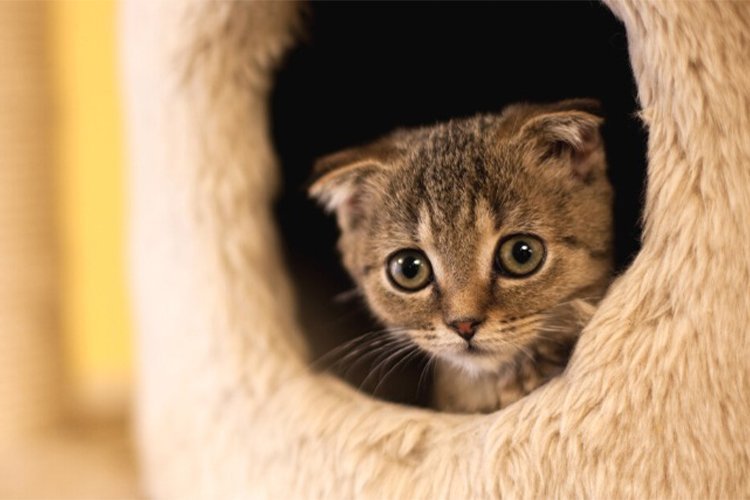
5) I gave him a reason to be in the same room that wasn’t “socialize”
This part mattered more than I expected. If my cat came out and the only thing waiting for him was strangers, he’d retreat again.
So I set up something neutral:
- his favorite blanket on a chair
- a perch by the window
- a toy left out (not waved in his face—just available)
Basically: “You can exist in this room without performing.”
What Changed Over Time (The Quiet Wins)
This wasn’t a “my cat became a golden retriever” transformation. It was smaller. And honestly, better.
1) He stopped vanishing instantly
He still went away sometimes, but the instant teleport-to-under-bed move became less automatic. Sometimes he’d pause first. Sometimes he’d go to the new safe zone instead of disappearing completely.
That’s progress.
2) He started coming out earlier
This was the big one. The recovery time shrank.
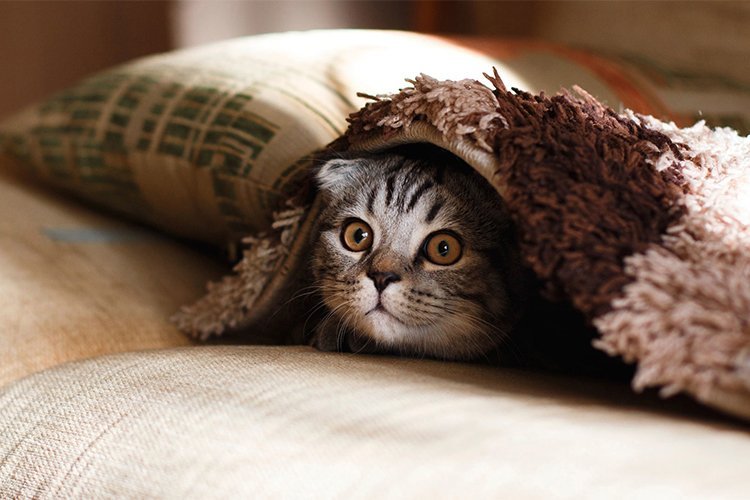
Instead of hiding the entire visit, he’d appear halfway through. Or he’d peek from the doorway and leave again. Not social, but present.
Then eventually, he started staying in the room—at a distance—like a little judgmental roommate.
3) He looked less tense when he did appear
Less crouching. Less “ready to sprint.” More normal posture. More casual grooming (which is a good sign—cats don’t groom when they feel unsafe).
4) He stopped acting weird after guests left
This surprised me. The post-guest “sniff everything like a detective” routine toned down. He bounced back faster. He didn’t seem as thrown off.
The Part That Almost Ruined It
I almost ruined it by trying to speed it up.
There was a moment where he came out while guests were there, and I got excited. I wanted to celebrate. I wanted to point him out. I wanted to be like, “LOOK HE’S BEING BRAVE!”
And that attention would’ve sent him straight back into hiding.
So I learned to treat his progress like a secret. Quiet wins. No spotlight. Let him believe he’s still invisible.
Cats are much braver when nobody makes it a big deal.
If You Want to Try It, Here’s the Simple Version
- Give your cat a safe zone that’s better than under the bed
- Practice door sounds in calm moments (sound → treat)
- Ask guests to ignore your cat at first
- Use a treat trail during real visits
- Provide a neutral reason for your cat to be in the room (perch/blanket/window)
- Don’t celebrate loudly when they finally appear
And if your cat is extremely stressed (panting, drooling, refusing to eat for long periods, or showing aggression out of fear), that’s a bigger conversation—sometimes with a vet—because stress can get intense for some cats.
Final Verdict
My cat didn’t become a party host. He still prefers his own people. He still disappears sometimes if the energy is loud.
But he stopped treating guests like a full emergency.
He learned that he could stay safe without fully disappearing, and I learned that helping a cat feel brave isn’t about forcing them to be social—it’s about removing pressure and giving them control.
And honestly? The moment your cat chooses to sit in the same room as strangers—at a distance, acting like they pay rent there—that’s a win.
Keep reading
 Pet Life
The Gut-Health Shift I Didn’t Expect to Matter This Much
Evan · · 6 min
 Pet Life
My Dog’s Morning Routine That Made His Joints Feel Better
Evan · · 8 min
 Pet Life
The Food-Bowl Pause That Helped My Dog Stop Inhaling Meals
Evan · · 8 min
 Pet Life
0 comments
Be the first to comment.