I bought it because of one annoying, quiet thought I couldn’t shake: I don’t actually know what “normal” looks like for him day to day.
Like… I know him. I can tell when he’s happy, hungry, tired, or pretending he didn’t hear me. But the moment something feels slightly off—less energy, more sleeping, a weirdly lazy walk—I start guessing. And guessing turns into Googling. And Googling turns into me convincing myself I need a whole plan.
So the tracker wasn’t a “cool gadget” moment. It was a “can I stop guessing?” moment.
And I’ll be honest: I expected the tracker to be either life-changing or completely pointless.
It ended up being neither. It was something else: quietly useful in the boring ways that actually matter.
Why I Even Tried It (The Real Reason, Not the Marketing Reason)
The main problem wasn’t that my dog had a health issue.
The problem was that his routines were inconsistent in ways I didn’t notice until they piled up.
Some days we’d do a solid walk. Other days it was quick and rushed. Some days he played a lot. Other days he did the “I’m going to lie here dramatically” thing. And I couldn’t tell what was normal variation vs. what was a pattern.
Also, I realized something slightly embarrassing: I over-trust my own memory.
If you ask me, “Has he been less active this week?” I’ll say yes or no based on vibes. Not based on anything real. And vibes are not reliable.
So the tracker was basically me saying: “I want receipts.” Not to panic. Just to understand.
The Setup Reality (A.K.A. The Part Nobody Mentions)
You know how tech always looks easy in ads? Clip it on, open the app, and suddenly you’re living in a clean minimalist house with a perfectly behaved dog.
Real life is different.
1) The fit matters more than I expected
The first couple days were trial-and-error. Too loose and it shifted around. Too tight and I felt guilty. I ended up adjusting it a few times until it sat comfortably and didn’t bounce like a tiny accessory trying to escape.
2) Your dog might not care… or might care a lot
Mine didn’t mind after the first hour. But those first 20 minutes? He kept turning his head like, “Why is there a new thing on my body?” Then he forgot about it completely, which is the ideal outcome.
3) The app tries to impress you immediately
The first few days the data looked messy. The tracker didn’t “know” him yet. I didn’t know what ranges meant. I kept checking it too much, like a person who just got a smartwatch and now believes they’re a doctor.
If you try one of these, I’d say give it at least a week before you decide if it’s useful.
What I Thought I’d Learn vs. What I Actually Learned
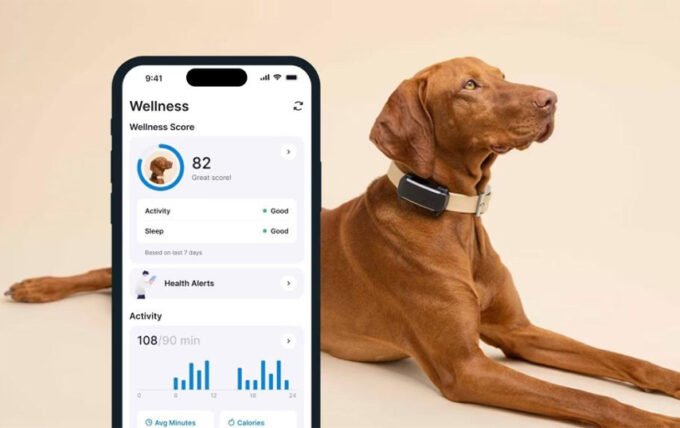
I assumed the tracker would tell me one main thing: activity.
Steps, movement, calories, whatever.
Instead, it taught me about patterns—the kind you don’t notice when you’re living inside the week.
1) “Active” doesn’t mean what I thought it meant
Some days we took a long walk, and I assumed that was a “big activity day.”
But the tracker showed me something weird: the long walk wasn’t always the most active day. Sometimes a shorter walk + a lot of light movement around the house added up to more overall activity than one intense outing and then six hours of sleeping.
It made me realize I was over-valuing “one big walk” and under-valuing movement that’s spread across the day.
2) My dog has a real routine—even when I don’t
This was wild.
Even on days where my schedule changed, my dog’s activity peaks were surprisingly consistent. Morning movement. A mid-day dip. A small evening bump. Then sleep mode.
And when that rhythm got disrupted (like visitors, loud weather, a late meal), his rest changed too. Not dramatically, but enough to see.
That was the first time I thought, Okay, this is actually useful.
3) Rest data was more eye-opening than steps
I expected to obsess over movement.
Instead, the sleep/rest patterns were what made everything click. Because I could finally see the difference between:
a day where he rested because he had a good active day
a day where he rested because he seemed a little “off”
They look the same in real life—dog lying down.
But the rhythm of the day looked different in the tracker, and once I noticed that, I started paying attention differently.
The “Oh… That Explains It” Moments
Over the month, I had a few moments where the tracker basically explained things I used to blame on mystery.
1) The short walk that fixed the whole day
There were days where he looked sluggish in the afternoon, and I would’ve just assumed he was tired.
But the tracker showed low movement all morning. Not because he was sick—because the morning got busy and we did less than usual. When I added a 10-minute gentle walk later, the day normalized.
It wasn’t dramatic. It was just a reminder that my dog’s body works better with consistent movement, not occasional bursts.
2) The “weekend effect”
Weekends were different in a way I didn’t realize.
He moved more—but his rest was lighter. More interruptions. More little wake-ups. Probably because the house was louder, people were moving around, and the day didn’t have the same calm rhythm.
So if he seemed slightly crankier on Sunday evenings, that wasn’t random. It was just a different environment.
3) Bad weather didn’t only reduce walks—it changed his mood
On rainy days, I assumed the only thing that changed was outdoor time.
But the tracker showed his whole day became lower energy. Less wandering. Less small movement. More long resting.
It was obvious once I saw it, but I needed the data to notice the pattern.
What Annoyed Me (Because It Wasn’t Perfect)
This part matters because if you go into it expecting perfection, you’ll be disappointed.
1) The data can create overthinking
I had to catch myself. Because once you have numbers, you want to interpret them like they’re sacred.
Some days the tracker would show “less activity” and I’d think, What did I do wrong? But real life has low days. Dogs have low days. It’s normal.
I had to learn to use the tracker as a guide, not a judge.
2) It can’t tell you why something changed
If rest dropped, it didn’t tell me, “He heard a weird noise” or “The neighbor’s dog barked all afternoon.”
It only showed the pattern. I still had to connect it to real life.
3) Not every metric matters for every pet
Some people love “readiness scores” or recovery stats. I mostly ignored those.
The most useful thing for me was: baseline activity + baseline rest + trend over time. That’s it.
Everything else felt like noise.
How I Used It Without Becoming Weird About It
After the first week of over-checking, I made a rule:
I only looked at it properly once a day, usually at night. Not constantly during the day.
Then I used it in a simple way:
If activity was low for two days in a row, I added a gentle extra walk
If rest seemed weird and he also seemed off in real life, I paid closer attention
If everything looked normal, I stopped thinking about it
That’s what made it sustainable.
Who This Is Actually Good For
This is the part people skip. Because not everyone needs this.
A tracker is genuinely helpful if:
you have a dog whose activity varies a lot and you can’t tell what’s normal
you’re trying to build a consistent routine without overdoing it
your dog is older and you want to notice gradual changes early
you tend to overthink and you’d rather have a calmer baseline than pure guessing
It’s less useful if:
your dog’s routine is already consistent and you’re not worried about patterns
you hate apps and you know you won’t check it after the novelty wears off
you think the tracker will “diagnose” anything (it won’t)
And one important note: if your dog shows sudden changes—pain, limping, not eating, vomiting, significant lethargy—data is not the main character. That’s a vet situation.
Final Verdict
Using a pet health tracker for 30 days didn’t turn me into a hyper-structured pet parent.
It didn’t “solve” anything on its own. It didn’t replace common sense. And it definitely didn’t make my dog live longer by magic.
What it did do was give me something I didn’t have before: a clear baseline.
It helped me see patterns I was missing. It helped me adjust routines before things felt “off.” And it made me calmer, because I wasn’t relying only on vibes and worry.
If you’re the kind of pet owner who notices small changes and then spirals a little—this kind of tool can be helpful, not because it’s fancy, but because it gives you a steady reference point.