He’s a cat. He sleeps. He judges. He pretends he doesn’t need me. Great. I can leave for a few hours and everything is fine.
Then I had a stretch where I was out more than usual—errands, longer workdays, a couple late nights—and I started noticing the little “after-effects” when I came home. Not dramatic destruction. More like… subtle signs that his routine got wobbly when I wasn’t around.
The water bowl would be weirdly untouched. His food would be either completely gone too fast or barely eaten. The litter box schedule felt off. And his mood would swing between “ignore you” and “cling to you like I’m a rare warm object.”
I didn’t want to turn my house into a robot pet lab, but I also didn’t want to keep guessing what was happening when I wasn’t there.
So I tried a few smart devices—not because I love gadgets, but because I wanted the basics to stay steady: food, water, a little stimulation, and peace of mind.
And honestly? A couple of them helped in a way that felt surprisingly… normal.
The Real Problem: Cats Love Routine (Even When They Act Like They Don’t)
Cats act independent, but routine matters to them more than people admit.
When meals happen at random times, or water runs low, or boredom hits, you don’t always see an immediate “problem.” You just see tiny shifts: less play, more vocalizing, random zoomies at 2 AM, weird picky eating, or that “I’m going to sit in the hallway and stare at you” energy.
So I made one goal: keep the essentials consistent even on days when I’m not.
Not perfect. Just stable enough that my cat feels like the house is still running normally.
What I Tried (And What Actually Earned Its Place in the House)
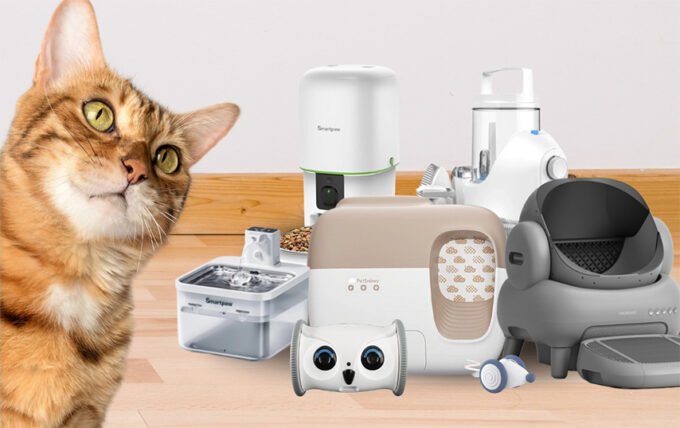
I’m not going to list ten gadgets like a catalog. Most people don’t need ten. I tried a few, kept what worked, and ignored the rest.
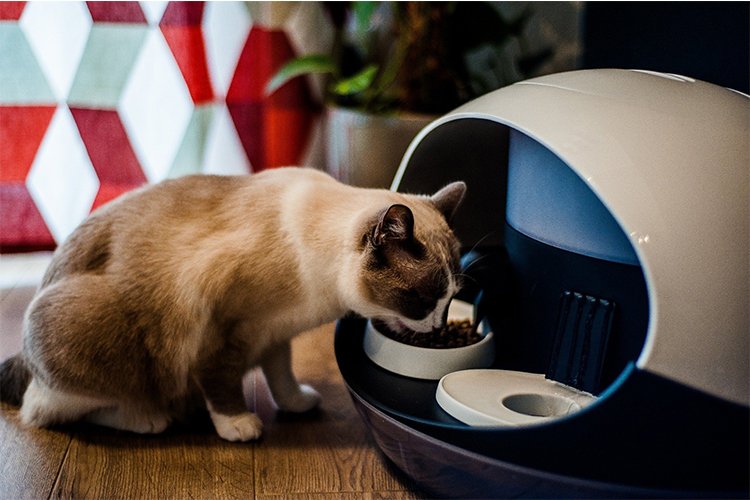
1) An automatic feeder (for predictable meals, not bigger meals)
This was the biggest difference-maker.
Not because my cat was starving without me—he wasn’t. But because meal timing got messy when I was busy. Sometimes he’d eat late. Sometimes he’d get fed early and then act like the day was confusing.
The feeder made meals boring and predictable, which is exactly what cats secretly want.
What changed:
He stopped doing the “follow you and scream” routine at random times
He stopped acting like every time I walked into the kitchen it was meal-time negotiations
His appetite became more consistent because the schedule became consistent
One thing I learned fast: portion control matters. It’s easy to accidentally overfeed if you treat the feeder like a convenience tool instead of a schedule tool. I set it carefully and didn’t keep adjusting it every day. The moment I kept fiddling, it defeated the purpose.
2) A pet camera (mostly for me, but still useful)
I bought this thinking it would be a cute way to check in.
It was cute for about 20 minutes.
Then it became practical.
Because the camera didn’t show me a cat having a dramatic lonely crisis. It showed me what he actually does: sleep, move spots, stare out the window, groom, nap again, occasionally sprint for no reason, then nap again.
But it helped in two real ways:
I could confirm he was eating and moving normally on days I got anxious about it
I could catch small behavior patterns I wasn’t seeing (like when he gets active, when he rests, and what time he tends to visit the litter area)
Also, seeing him sleep peacefully while I was out weirdly made me less guilty. Not because guilt is always logical, but because I had proof that he wasn’t sitting there “waiting sadly” like a movie scene.
3) A fountain water bowl (the boring upgrade that actually stuck)
This isn’t always called a “smart” device, but in terms of routine impact, it’s huge.
My cat would drink… but not reliably. And the more I read about cats and hydration, the more it clicked that they often prefer moving water. The fountain made him drink more regularly without me standing there trying to convince him water is a good idea.
The “smart” part wasn’t the tech. The smart part was that it removed the daily friction of me wondering, Did he drink enough today?
One practical note: fountains need cleaning. If you don’t clean them regularly, they go from helpful to gross quickly. So this only works if you’re okay with a simple cleaning routine.
4) An interactive toy (only if you pick the right kind)
This one surprised me because half of interactive toys are either:
too loud
too chaotic
too easy to ignore
But the right interactive toy can help on days when your cat has energy and nobody’s home to play.
The key, at least for my cat, was a toy that felt unpredictable but not aggressive. Something that moves gently, pauses, then moves again. Cats love the illusion that they’re hunting something “real,” even if it’s basically a tiny motorized nonsense machine.
I didn’t rely on it every day. I used it as a boredom breaker. Especially on days where I knew I’d be out longer than normal.
What Changed Over Time (The Quiet Wins)
This was not a “my cat became a new cat” story.
It was more like the house became less chaotic when I wasn’t around.
1) Meal-time anxiety dropped
He stopped acting like food was a mystery that might disappear forever. The automatic feeder made meals predictable, which made him calmer.
2) Hydration improved (and that showed up in small ways)
More drinking meant fewer “dry” days, and it also made his routine feel steadier. I’m cautious about claiming big health changes, but I did notice fewer moments where he seemed extra sluggish or cranky.
3) He seemed less bored in the evenings
When cats get bored, it shows up later. The 2 AM zoomies. The random biting of your ankles. The “I’m going to knock this off the table now” phase.
Having more routine stability during the day made evenings calmer.
4) I worried less
Not because I became careless, but because I wasn’t guessing as much.
If I was out late, I knew he still had food and water. If I was curious, I could check the camera. If he needed stimulation, the toy could help.
It wasn’t about spying on him. It was about peace of mind.
The Part That Almost Ruined It
I almost ruined this by trying too many devices at once.
When you add a feeder, a camera, a fountain, and a toy all at the same time, it becomes chaos—for you and for the cat. Cats don’t love sudden changes.
So I learned the better way: Introduce one thing, let it become normal, then add another.
Also: I had to stop “checking” constantly. If I checked the camera every 10 minutes, that wasn’t pet care. That was me feeding my own anxiety.
If You Want to Try This, Here’s the Simple Version
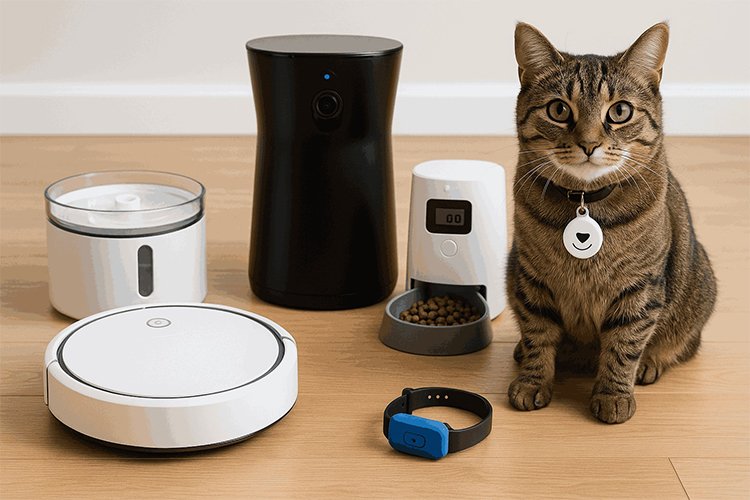
If you want a low-drama setup for days you’re away:
Start with an automatic feeder if meal timing is inconsistent
Add a fountain if your cat’s drinking feels unreliable
Use a camera if you need peace of mind (but don’t obsess)
Try one interactive toy only if your cat actually engages with it
And keep it simple. Cats don’t need a smart home. They need a stable home.
Final Verdict
These devices didn’t replace real care. They didn’t replace playtime, attention, or noticing your cat’s mood.
But they did something genuinely helpful: they kept the basics steady when my schedule wasn’t.
And for cats, steadiness is comfort.
If you’re out a lot, or you’re trying to keep routines consistent without turning pet care into a constant juggling act, a couple of smart tools can help—especially the ones that support food, water, and predictable rhythm.