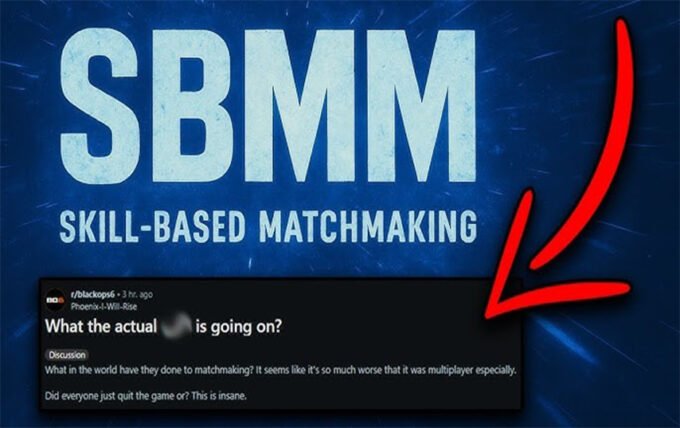
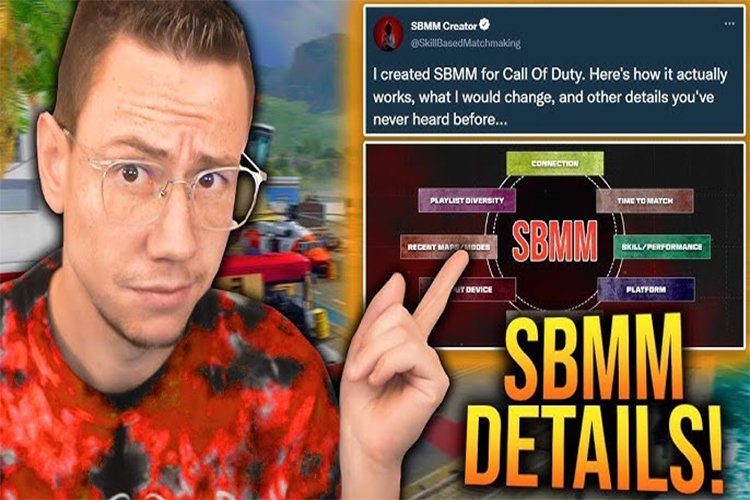
I used to have a very predictable post-match routine: lose two games, win one, then start talking like I’d discovered a conspiracy. “Why are my lobbies suddenly insane?” “Why do I get one good match and then three nightmares?” “Why does the game punish me for playing well?” If you’ve ever said any version of that, I’m not judging you. I’ve said it with full confidence while eating cold leftovers at 1 a.m. like I was delivering a serious analysis. The funny part is that I wasn’t even wrong about the feeling. The feeling is real. You can absolutely feel the matchmaking “tighten up” after a good match, and you can absolutely have nights where every lobby feels like a tournament. What changed for me wasn’t that I suddenly loved SBMM. What changed was realizing I was using SBMM as a shortcut explanation for things I didn’t want to look at—my consistency, my tilt, and the way I queued when I was already tired.
The biggest complaint is simple: it makes casual feel less casual. When matchmaking is strong, you don’t get those relaxed games where you can experiment, play goofy, or half-focus while chatting. You get constant “try” energy, because the system is trying to keep matches close. That can feel exhausting, especially if you’re someone who plays games to decompress. Another real issue is that SBMM can create a weird emotional rhythm: you have one match where you feel amazing, then the next match you feel like you can’t breathe. Even if that’s statistically “balanced,” it doesn’t always feel good. And if you’re playing with friends of mixed skill, it can get messy fast—someone in the group feels like they’re getting farmed, someone else feels like they’re carrying, and suddenly the squad vibe turns into silent stress. That’s not a small problem. That’s literally how friend groups stop playing certain games together.
Here’s the part people don’t like hearing: without SBMM, a lot of average players get crushed and quit. The “old-school” random matchmaking fantasy sounds fun until you remember what it actually looks like: a handful of very strong players run the lobby, everyone else becomes background. If you’re a good player, that can feel relaxing and fun. If you’re not, it feels like you’re not allowed to play. SBMM (in theory) is trying to stop that. It’s trying to keep matches from becoming one-sided, and it’s trying to make sure new or average players aren’t just free highlights for people who play eight hours a day. The problem is the system can still feel bad even when it’s doing what it’s designed to do—because close matches require effort, and effort is tiring when you wanted “casual.” Also, no matchmaking system can perfectly measure skill in games where teamwork, role choice, ping, mood, and randomness matter. So even “good SBMM” sometimes feels unfair.
My Middle Take (What I Actually Think Now)
I don’t think SBMM is evil, and I don’t think it’s perfect. I think the real frustration comes from two things people don’t say out loud: we want control over the vibe, and we want honesty about what mode we’re in. If a mode is truly ranked or competitive, fine—give me tight matches and let me sweat. If a mode is truly casual, let it be looser so the experience isn’t constant intensity. The issue is when “casual” becomes “ranked without the badge,” because then you’re sweating without the reward structure that makes sweating feel worth it. And personally, once I admitted that, I changed my behavior in a way that helped a lot: I stopped queuing certain modes when I didn’t have the energy for them. That sounds obvious, but I used to do the opposite. I’d feel tired, I’d queue anyway, I’d lose, then I’d blame SBMM like the system had personally targeted me. In reality, I was showing up underpowered and expecting the game to be gentle.
The second thing I changed was how I measure a “good session.” If the only good session is “I dominated,” SBMM will always feel like punishment because domination becomes rare by design. But if a good session is “I played clean” or “I improved one thing,” SBMM stops feeling like a villain and starts feeling like a mirror. Not a comfortable mirror—still a mirror.
Final Verdict (And a Question for You)
SBMM isn’t the reason you’re bad, and it isn’t the reason you’re good. It’s a system trying to keep matches close, and close matches are inherently more intense. The real problem is when the game doesn’t give you enough choice—choice between sweat and chill, choice to protect mixed-skill friend groups, choice to play casually without feeling like you’ve entered a scrim. I still get annoyed at matchmaking sometimes. I still have nights where it feels brutal. But I don’t treat it like a conspiracy anymore. I treat it like a trade: tighter matches mean fewer easy lobbies, and fewer easy lobbies means you can’t use “casual” as a vacation from effort.
Question: would you rather have looser casual lobbies (more variety, more stomps) or tighter SBMM (more close games, more sweat)?